

Choosing the Right Roofing Material for Your Home
Choosing the right roofing material can affect your home’s appearance, durability, maintenance needs and long-term value. Compare the most popular pitched and flat roofing options in the UK and find out which materials may best suit your property, roof type and location.

Why you can trust our content
We understand that the roofing industry can be confusing, with plenty of outdated or misleading information. That’s why we rely only on trusted, proven sources to guide our advice and installations:


At a glance
When the time comes to replace your roof, one of the decisions you’ll face is choosing the right material. It affects how your home looks, how well it performs in different weather conditions, how much maintenance it will need and how long it will last. With a range of options available for both pitched and flat roofs, it’s easy to feel overwhelmed without a clear guide to help you compare them. This article walks through the most common roofing materials used in the UK so you can approach the conversation with your roofer well informed.
For tailored advice based on your property type and requirements, speak to the team at Essex Roofing and request a free written quotation.
What Factors Should Influence Your Choice of Roofing Material?
Before diving into the materials themselves, it’s worth thinking about what matters most for your specific property. The right choice for one home may not be the right choice for another. Key factors to consider include:
- The style and age of your property – Period and heritage properties often look best with natural slate or clay tiles, while modern homes suit a wider range of options.
- Your roof’s pitch – Steeper pitches work well with most tile and slate options, while lower pitches require materials specifically designed to handle reduced water runoff.
- Planning considerations – If your home is in a conservation area or is listed, your choice of roofing material may be restricted by local authority requirements.
- Maintenance expectations – Some materials require very little ongoing attention, while others benefit from periodic inspection and minor maintenance.
- Long-term durability – Consider how long you plan to remain in the property and choose a material with a lifespan that reflects that investment.
What Type of Roof Do You Have?
Please select the roof type of your property. This helps us determine the best installation method and equipment for your home.
 Flat Roof
 Pitched Roof
 Conservatory Roof
It just takes 60 Sec
And then you can book a free consultation
Pitched Roof Materials Explained
For traditional pitched roofs, the most common materials used in the UK are concrete tiles, clay tiles and natural slate. Each has its own set of characteristics, and the best choice depends on the factors above alongside your personal preference.
Concrete tiles are a popular, practical option that suits a wide range of property types. They’re durable, widely available and come in a variety of profiles and colours, making them a versatile choice for many homes across Essex.
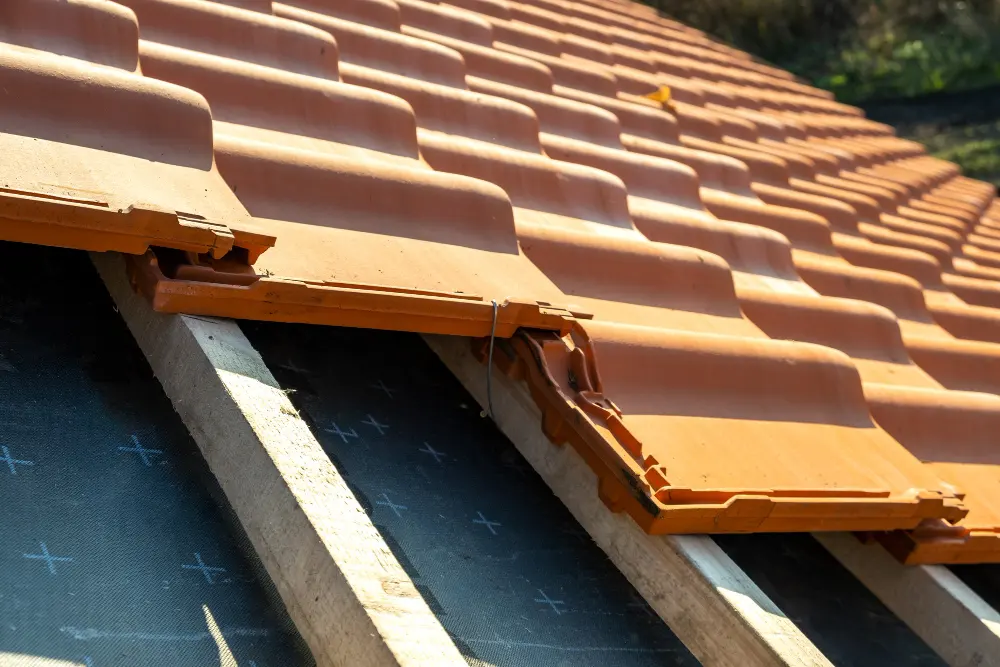
Clay tiles offer a more traditional aesthetic and are particularly well suited to period properties. They tend to be lighter than concrete alternatives and carry a classic appearance that complements older architectural styles.
Natural slate is regarded as one of the premium choices for pitched roofs. It has an elegant appearance, handles the UK climate well and can last for generations when properly fitted and maintained. It’s often the preferred choice for higher-end or period properties.
Flat Roof Materials Compared
Flat roofs require a different approach entirely. Unlike pitched roofs, where gravity does much of the work in shedding water, flat roofs rely almost entirely on the quality and integrity of the waterproofing membrane. The choice of roofing material here has a significant impact on longevity and performance.
| Material | Best For | Key Characteristic | Maintenance Level |
|---|---|---|---|
| EPDM Rubber | Extensions, garages, outbuildings | Highly flexible with excellent waterproofing | Very low |
| Warm Roof System | Extensions requiring thermal performance | Insulation built into the roof build-up | Very low |
| Firestone | Larger flat roof areas | Strong, puncture-resistant membrane | Low |
| Restec | Repairs and new installations | Liquid-applied with a seamless finish | Low |
| Traditional Felt | Older installations | Lower upfront cost with a shorter lifespan |
Modern flat roof systems have come a long way from the traditional felt roofs that were commonplace on UK extensions and outbuildings for decades. EPDM in particular has become a highly regarded choice for homeowners wanting a durable, low-maintenance solution with a long service life.
Does Your Location Affect the Best Material Choice?
The local climate and environment can play a role in which materials perform best over time. Properties in coastal areas, for example, may benefit from materials that offer stronger resistance to salt air and wind-driven rain. Homes surrounded by trees may need materials that are easier to clean or less susceptible to moss retention.
For homes across Essex and the surrounding area, the variable climate means that durability and weatherproofing are important considerations regardless of roof type. Discussing your specific location and any environmental factors with your roofer during the survey stage will help ensure the material recommended is genuinely suited to your circumstances.
A Scenario Worth Considering
A homeowner in Saffron Walden was replacing the flat roof on a rear extension that had been covered with traditional felt for many years. The felt had developed multiple cracks and had been patched several times, but the patches were no longer holding. The homeowner wanted a long-term solution that wouldn’t need constant attention.
After a survey and discussion with Essex Roofing, an EPDM warm roof system was recommended. The warm roof build-up also improved the thermal performance of the extension, which had previously been cold in winter. This illustrates why choosing the right roofing material isn’t just about the surface itself. The overall system and how it’s constructed matters just as much.
Related articles
What Type of Roof Do You Have?
Please select the roof type of your property. This helps us determine the best installation method and equipment for your home.
Flat Roof
Pitched Roof
Conservatory Roof
At a glance
When the time comes to replace your roof, one of the decisions you’ll face is choosing the right material. It affects how your home looks, how well it performs in different weather conditions, how much maintenance it will need and how long it will last. With a range of options available for both pitched and flat roofs, it’s easy to feel overwhelmed without a clear guide to help you compare them. This article walks through the most common roofing materials used in the UK so you can approach the conversation with your roofer well informed.
For tailored advice based on your property type and requirements, speak to the team at Essex Roofing and request a free written quotation.
What Factors Should Influence Your Choice of Roofing Material?
Before diving into the materials themselves, it’s worth thinking about what matters most for your specific property. The right choice for one home may not be the right choice for another. Key factors to consider include:
- The style and age of your property – Period and heritage properties often look best with natural slate or clay tiles, while modern homes suit a wider range of options.
- Your roof’s pitch – Steeper pitches work well with most tile and slate options, while lower pitches require materials specifically designed to handle reduced water runoff.
- Planning considerations – If your home is in a conservation area or is listed, your choice of roofing material may be restricted by local authority requirements.
- Maintenance expectations – Some materials require very little ongoing attention, while others benefit from periodic inspection and minor maintenance.
- Long-term durability – Consider how long you plan to remain in the property and choose a material with a lifespan that reflects that investment.
What Type of Roof Do You Have?
Please select the roof type of your property. This helps us determine the best installation method and equipment for your home.
Flat Roof
Pitched Roof
Conservatory Roof
It just takes 60 Sec
And then you can book a free consultation
Pitched Roof Materials Explained
For traditional pitched roofs, the most common materials used in the UK are concrete tiles, clay tiles and natural slate. Each has its own set of characteristics, and the best choice depends on the factors above alongside your personal preference.
Concrete tiles are a popular, practical option that suits a wide range of property types. They’re durable, widely available and come in a variety of profiles and colours, making them a versatile choice for many homes across Essex.
Clay tiles offer a more traditional aesthetic and are particularly well suited to period properties. They tend to be lighter than concrete alternatives and carry a classic appearance that complements older architectural styles.
Natural slate is regarded as one of the premium choices for pitched roofs. It has an elegant appearance, handles the UK climate well and can last for generations when properly fitted and maintained. It’s often the preferred choice for higher-end or period properties.
Flat Roof Materials Compared
Flat roofs require a different approach entirely. Unlike pitched roofs, where gravity does much of the work in shedding water, flat roofs rely almost entirely on the quality and integrity of the waterproofing membrane. The choice of roofing material here has a significant impact on longevity and performance.
| Material | Best For | Key Characteristic | Maintenance Level |
|---|---|---|---|
| EPDM Rubber | Extensions, garages, outbuildings | Highly flexible with excellent waterproofing | Very low |
| Warm Roof System | Extensions requiring thermal performance | Insulation built into the roof build-up | Very low |
| Firestone | Larger flat roof areas | Strong, puncture-resistant membrane | Low |
| Restec | Repairs and new installations | Liquid-applied with a seamless finish | Low |
| Traditional Felt | Older installations | Lower upfront cost with a shorter lifespan |
Modern flat roof systems have come a long way from the traditional felt roofs that were commonplace on UK extensions and outbuildings for decades. EPDM in particular has become a highly regarded choice for homeowners wanting a durable, low-maintenance solution with a long service life.
Does Your Location Affect the Best Material Choice?
The local climate and environment can play a role in which materials perform best over time. Properties in coastal areas, for example, may benefit from materials that offer stronger resistance to salt air and wind-driven rain. Homes surrounded by trees may need materials that are easier to clean or less susceptible to moss retention.
For homes across Essex and the surrounding area, the variable climate means that durability and weatherproofing are important considerations regardless of roof type. Discussing your specific location and any environmental factors with your roofer during the survey stage will help ensure the material recommended is genuinely suited to your circumstances.
A Scenario Worth Considering
A homeowner in Saffron Walden was replacing the flat roof on a rear extension that had been covered with traditional felt for many years. The felt had developed multiple cracks and had been patched several times, but the patches were no longer holding. The homeowner wanted a long-term solution that wouldn’t need constant attention.
After a survey and discussion with Essex Roofing, an EPDM warm roof system was recommended. The warm roof build-up also improved the thermal performance of the extension, which had previously been cold in winter. This illustrates why choosing the right roofing material isn’t just about the surface itself. The overall system and how it’s constructed matters just as much.
Related articles
What Type of Roof Do You Have?
Please select the roof type of your property. This helps us determine the best installation method and equipment for your home.
Flat Roof
Pitched Roof
Conservatory Roof