

Signs Your Home Needs a New Roof
Discover the key warning signs that your roof may need replacing, from cracked tiles and sagging sections to damp and ageing materials. Learn when a repair may be enough and when a new roof could be the more cost-effective solution.

Why you can trust our content
We understand that the roofing industry can be confusing, with plenty of outdated or misleading information. That’s why we rely only on trusted, proven sources to guide our advice and installations:


At a glance
Your roof works hard every single day, shielding your home from rain, wind and everything in between. Because it does its job quietly and out of sight, it’s easy to overlook the early warning signs that something isn’t right. By the time a leak appears inside your home, the underlying damage may have been building for months or even years. Knowing what to look out for can help you catch problems early, protect your property and avoid more extensive remedial work further down the line.
If you’re already noticing any of the signs covered in this guide, it’s worth speaking to a qualified roofer sooner rather than later. Request a free survey from Essex Roofing and get an honest, no-pressure assessment.
What Are the Most Common Signs You Need a New Roof?
There are several tell-tale indicators that a roof is approaching the end of its useful life. Some are visible from the ground, while others only become apparent on closer inspection. Here are the key warning signs to be aware of:
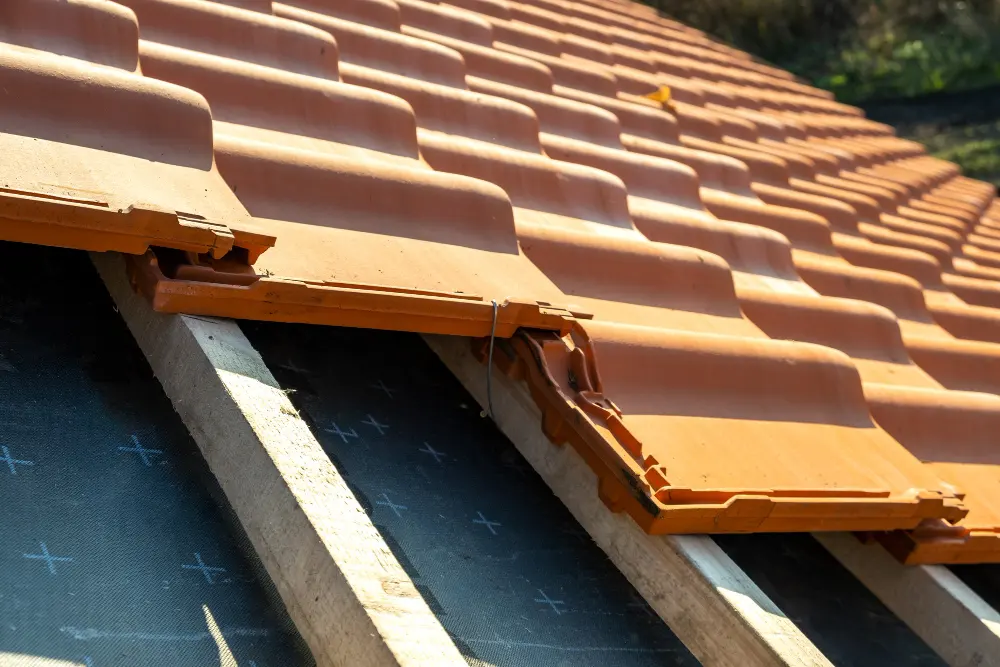
- Cracked, curling or missing tiles or slates – Individual damaged tiles can sometimes be replaced, but widespread cracking or curling suggests the entire roof covering is deteriorating.
- Sagging roof sections – Any visible dips or sags in the roofline point to structural problems that go beyond the surface covering.
- Granule loss on felt or flat roof surfaces – On flat roofs, this often signals that the waterproofing membrane is reaching the end of its life.
- Persistent damp patches in the loft – Moisture finding its way into the loft space is a strong sign that the roof is no longer weathertight.
- Daylight visible in the loft – If you can see light coming through from outside, water can get in too.
- Moss and algae growth – Surface growth retains moisture and can accelerate the breakdown of roofing materials over time.
How Age Affects Your Roof
The age of a roof is one of the most practical indicators of whether replacement is worth considering. Different roofing materials have different expected lifespans, and understanding where yours sits within that range helps you make informed decisions about repair versus replacement.
A roof that has reached or exceeded its expected lifespan may not show dramatic visible signs of failure, but it becomes increasingly vulnerable to weather damage and may struggle to perform as it should. If your roof is approaching the upper end of its lifespan and is already showing one or more of the signs listed above, a full replacement is likely to be more cost-effective than repeated repairs.
What Type of Roof Do You Have?
Please select the roof type of your property. This helps us determine the best installation method and equipment for your home.
 Flat Roof
 Pitched Roof
 Conservatory Roof
It just takes 60 Sec
And then you can book a free consultation
Is a Repair Enough?
Not every roofing issue requires a full replacement. In many cases, targeted repairs can resolve localised problems and extend the life of an otherwise sound roof by several more years. The key is getting an honest assessment from a qualified roofer who will tell you what you actually need rather than recommend unnecessary work.
A repair is often sufficient when damage is confined to a small area, the underlying structure is in good condition and the rest of the roof covering is performing well. However, if problems are widespread, the structure is compromised or the roof is already well past its expected lifespan, investing in a full new roof is usually the more practical long-term decision.
What Flat Roof Owners Should Watch For
Flat roofs present slightly different warning signs compared to pitched roofs and deserve particular attention. Because water doesn’t shed as readily from a flat surface, even a small breach in the waterproofing can allow moisture to pool and penetrate the structure below.
Signs to watch for on a flat roof include blistering or bubbling on the surface, visible cracking in the membrane, standing water that hasn’t drained within 24 hours of rainfall and any signs of the covering lifting or separating at the edges. Modern flat roof systems such as EPDM offer significantly improved durability over older felt-based roofs, so if your flat roof is original to an older extension or outbuilding, it may well be due for an upgrade.
If you’d like an expert eye on your flat roof, the team at Essex Roofing can carry out a thorough assessment across Brentwood and the wider Essex area.
Related articles
What Type of Roof Do You Have?
Please select the roof type of your property. This helps us determine the best installation method and equipment for your home.
Flat Roof
Pitched Roof
Conservatory Roof
At a glance
Your roof works hard every single day, shielding your home from rain, wind and everything in between. Because it does its job quietly and out of sight, it’s easy to overlook the early warning signs that something isn’t right. By the time a leak appears inside your home, the underlying damage may have been building for months or even years. Knowing what to look out for can help you catch problems early, protect your property and avoid more extensive remedial work further down the line.
If you’re already noticing any of the signs covered in this guide, it’s worth speaking to a qualified roofer sooner rather than later. Request a free survey from Essex Roofing and get an honest, no-pressure assessment.
What Are the Most Common Signs You Need a New Roof?
There are several tell-tale indicators that a roof is approaching the end of its useful life. Some are visible from the ground, while others only become apparent on closer inspection. Here are the key warning signs to be aware of:
- Cracked, curling or missing tiles or slates – Individual damaged tiles can sometimes be replaced, but widespread cracking or curling suggests the entire roof covering is deteriorating.
- Sagging roof sections – Any visible dips or sags in the roofline point to structural problems that go beyond the surface covering.
- Granule loss on felt or flat roof surfaces – On flat roofs, this often signals that the waterproofing membrane is reaching the end of its life.
- Persistent damp patches in the loft – Moisture finding its way into the loft space is a strong sign that the roof is no longer weathertight.
- Daylight visible in the loft – If you can see light coming through from outside, water can get in too.
- Moss and algae growth – Surface growth retains moisture and can accelerate the breakdown of roofing materials over time.
How Age Affects Your Roof
The age of a roof is one of the most practical indicators of whether replacement is worth considering. Different roofing materials have different expected lifespans, and understanding where yours sits within that range helps you make informed decisions about repair versus replacement.
A roof that has reached or exceeded its expected lifespan may not show dramatic visible signs of failure, but it becomes increasingly vulnerable to weather damage and may struggle to perform as it should. If your roof is approaching the upper end of its lifespan and is already showing one or more of the signs listed above, a full replacement is likely to be more cost-effective than repeated repairs.
What Type of Roof Do You Have?
Please select the roof type of your property. This helps us determine the best installation method and equipment for your home.
Flat Roof
Pitched Roof
Conservatory Roof
It just takes 60 Sec
And then you can book a free consultation
Is a Repair Enough?
Not every roofing issue requires a full replacement. In many cases, targeted repairs can resolve localised problems and extend the life of an otherwise sound roof by several more years. The key is getting an honest assessment from a qualified roofer who will tell you what you actually need rather than recommend unnecessary work.
A repair is often sufficient when damage is confined to a small area, the underlying structure is in good condition and the rest of the roof covering is performing well. However, if problems are widespread, the structure is compromised or the roof is already well past its expected lifespan, investing in a full new roof is usually the more practical long-term decision.
What Flat Roof Owners Should Watch For
Flat roofs present slightly different warning signs compared to pitched roofs and deserve particular attention. Because water doesn’t shed as readily from a flat surface, even a small breach in the waterproofing can allow moisture to pool and penetrate the structure below.
Signs to watch for on a flat roof include blistering or bubbling on the surface, visible cracking in the membrane, standing water that hasn’t drained within 24 hours of rainfall and any signs of the covering lifting or separating at the edges. Modern flat roof systems such as EPDM offer significantly improved durability over older felt-based roofs, so if your flat roof is original to an older extension or outbuilding, it may well be due for an upgrade.
If you’d like an expert eye on your flat roof, the team at Essex Roofing can carry out a thorough assessment across Brentwood and the wider Essex area.
Related articles
What Type of Roof Do You Have?
Please select the roof type of your property. This helps us determine the best installation method and equipment for your home.
Flat Roof
Pitched Roof
Conservatory Roof